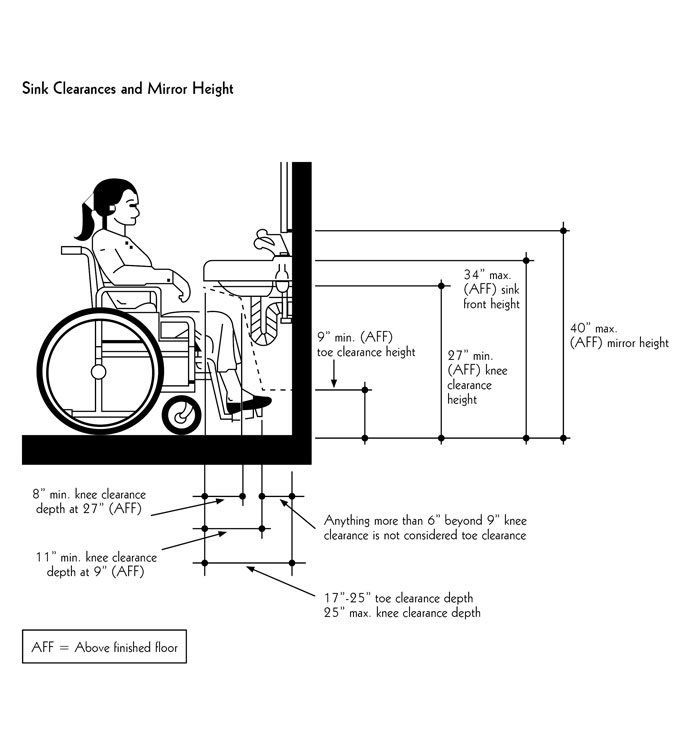
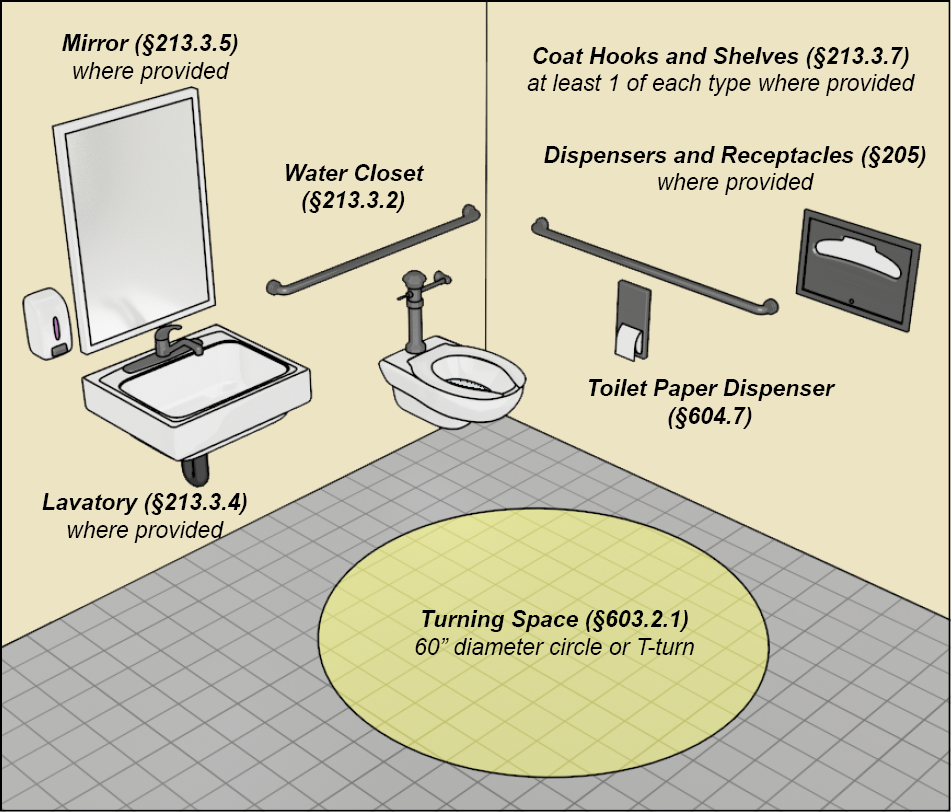
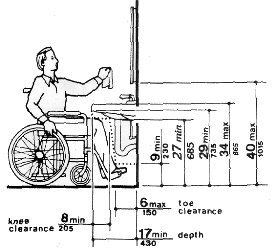
4.19 Lavatories and Mirrors. 4.19.1 General. The requirements of 4.19 shall apply to lavatory fixtures, vanities, and built-in lavatories.
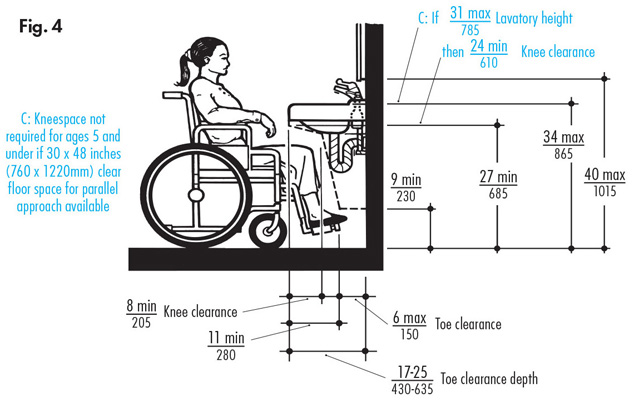
4.19.2 Height and Clearances. Lavatories shall be mounted with the rim or counter surface no higher than 34 in (865 mm) above the finish floor. Provide a clearance of at least 29 in (735 mm) above the finish floor to the bottom of the apron.
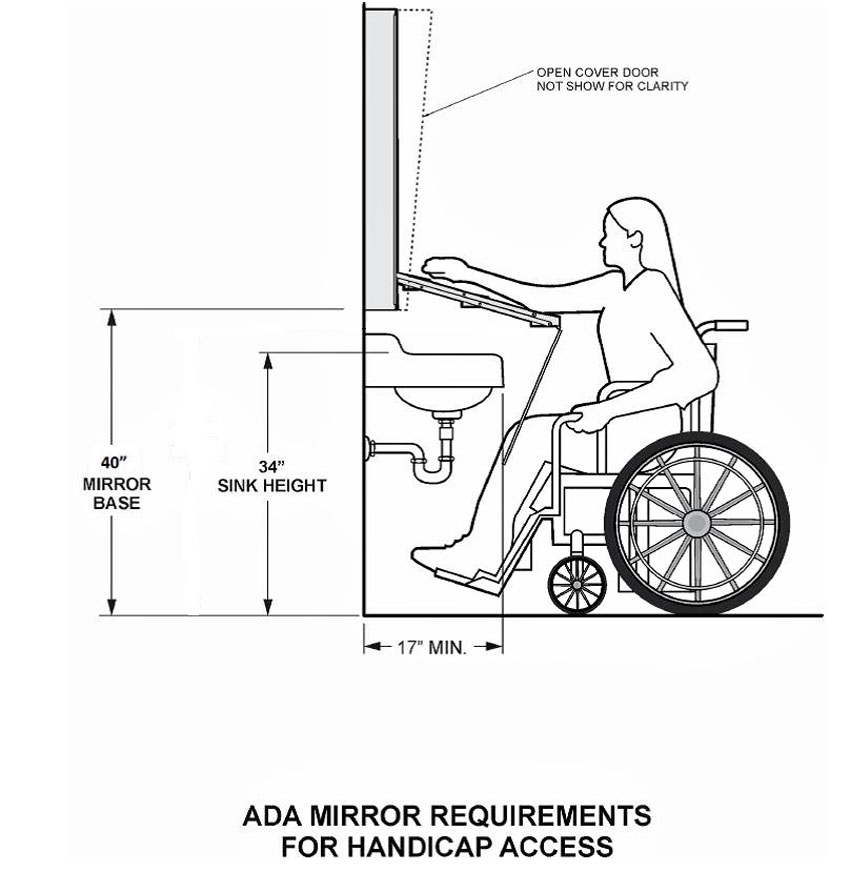
Ada Bathroom Mirror Requirements – Everything Bathroom
Knee and toe. Reflecting on ADA Compliance: ADA bathroom mirror requirements go beyond aesthetics; they are designed to ensure accessibility for individuals with disabilities. These guidelines dictate the height, placement, and clear floor space in front of the mirror to accommodate wheelchair users and those with limited mobility.
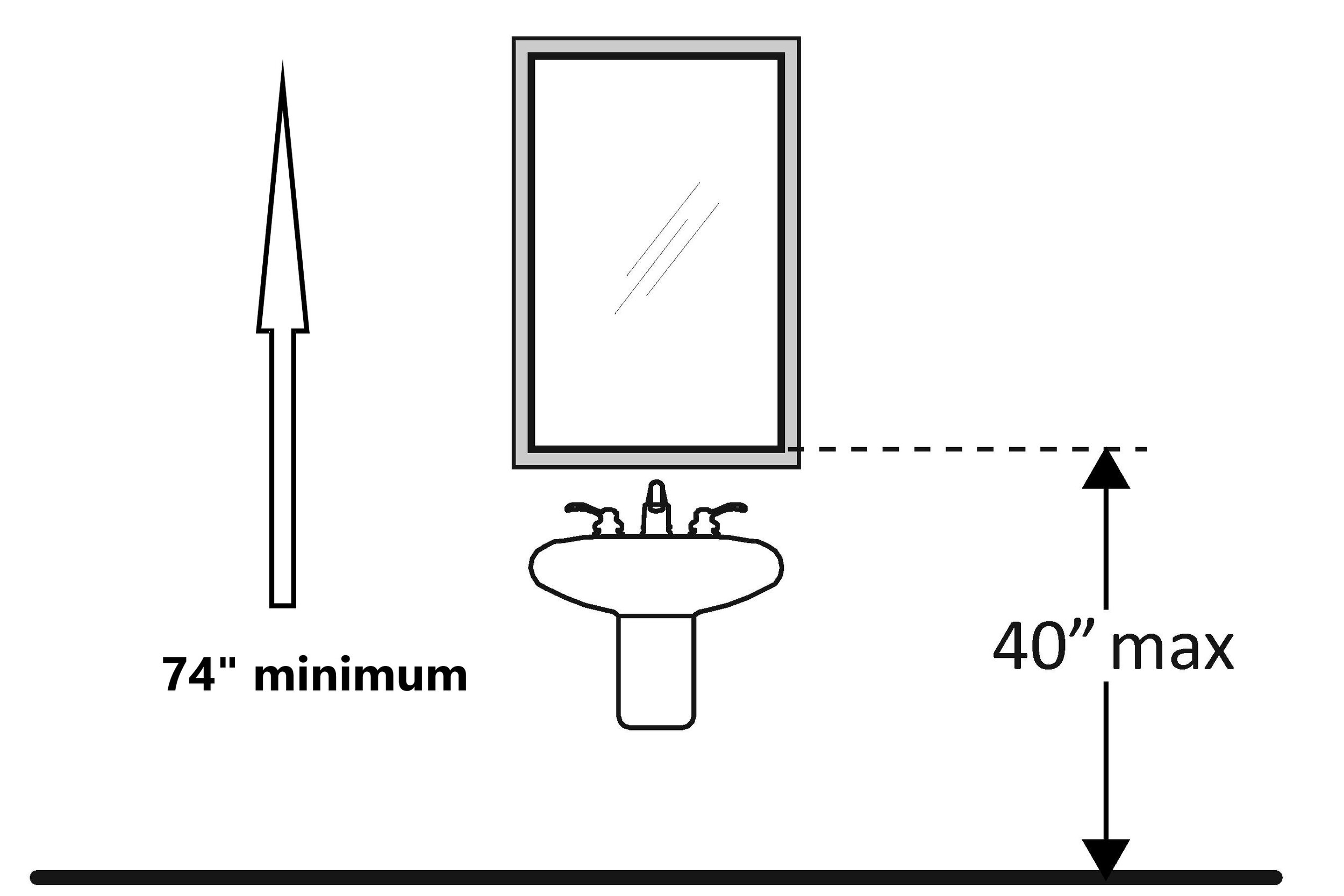
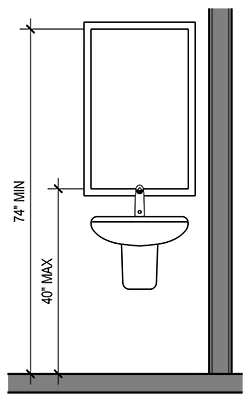
Height Matters: ADA regulations state that the bottom edge of the mirror. ADA Mirror Regulations ExplainedADA Mirror Requirements Note: The source for the information below is the 2010 ADA Standards for Accessible Design. Advisory 603.3 Mirrors.
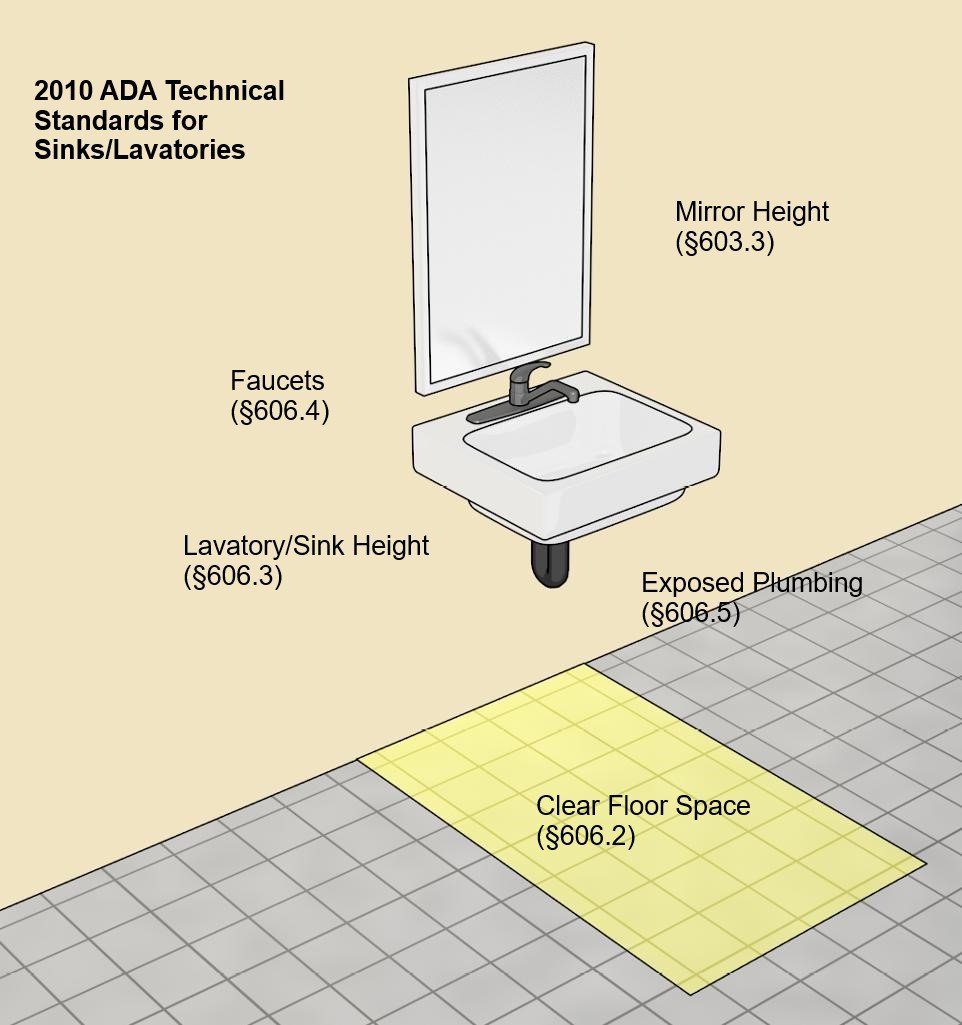
Ada Bathroom Mirror Requirements at Doreen Woods blog
A single full-length mirror can accommodate a greater number of people, including children. In order for mirrors to be usable by people who are ambulatory and people who use wheelchairs, the top edge of mirrors should be 74 inches (1880 mm) minimum from the floor or ground. Components of an Accessible Bathing Facility Requirements in the Standards address doors, turning space, plumbing fixtures, mirrors, dispensers, shelves, and other elements provided.
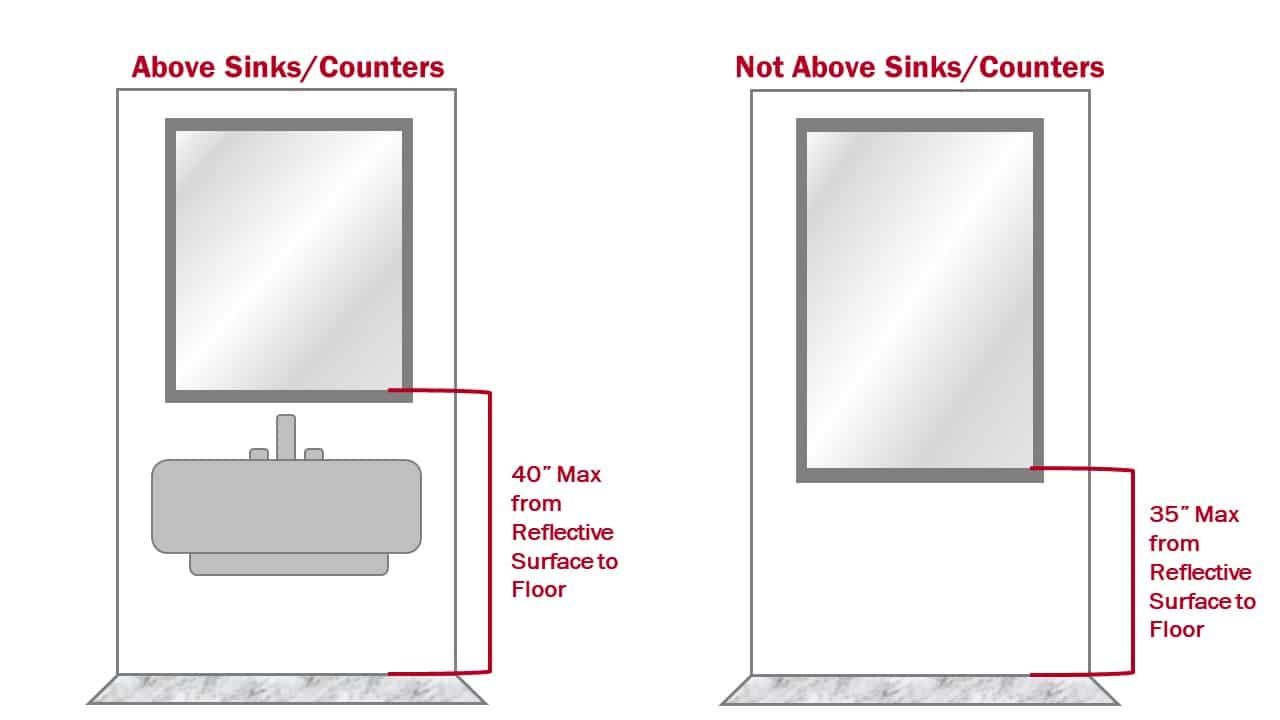
Other provisions in the Standards also apply. The ADA mirror height bathroom standard exists to serve users at various heights and positions. A person in a wheelchair typically has an eye level between 43 and 51 inches from the floor, significantly lower than someone standing.
Ada Bathroom Mirror Height – Rispa
603.3 Mirrors 2010 ADA Standards > 6 Plumbing Elements and Facilities > 603 Toilet and Bathing Rooms > 603.3 Mirrors Go To Full Code Chapter. The ADA Standards for Accessible Design, specifically section 603.3, addresses the requirements for mirrors in accessible restrooms. The primary goal of these regulations is to provide individuals using wheelchairs or other mobility devices with a clear and unobstructed view in the mirror.
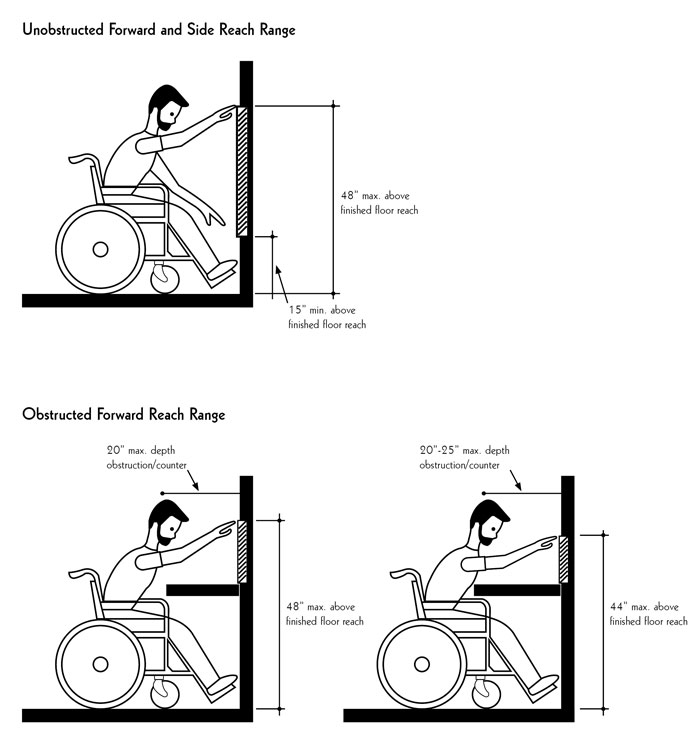
Achieving this requires careful consideration of mirror placement, height, and angle. The maximum recommended height for the lowest part of a bathroom vanity mirror to comply with universal design and ADA standards is 48 inches from the floor or a minimum of 15 inches from the top of the counter or vanity. Ages 9-12: Maintain the standard ADA measurements while ensuring that the urinal is accessible and usable for children of this age range.
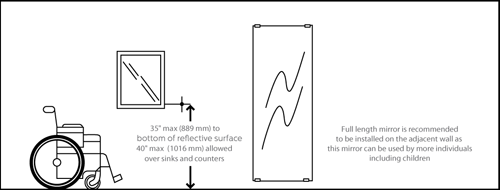
Sinks and Mirrors At least one sink and mirror combination per bathroom must be compliant with the latest ADA standards and located outside of a stall.